The Dragon Bonus Push Trigger Nobody Audits
The push on a Dragon Bonus wager fires exclusively when the banker and player hands land on identical totals after the third card is resolved — but the real dirt is that most players confuse a natural tie with a genuine push condition, and that confusion costs them real edge. This isn't some casino courtesy. It's a hard-coded settlement branch buried inside the baccarat variant's payout matrix, and if you don't understand exactly when it activates, you're donating value to the house on every single shoe. 💀
Hardware Settlement Logic Behind the Push
The Dragon Bonus side bet pays on non-natural wins and ties, with the payout scale escalating based on margin of victory. A natural 8 or 9 triggers a flat 1-to-1 return. But here's the mechanical reality that most punters miss: the push condition is not the same as the main game tie. The Dragon Bonus push rule activates when the winning margin equals zero — meaning the banker and player totals are mathematically identical. That sounds obvious until you realize the firmware handles this through a separate comparator circuit that reads both hand values after the drawing sequence completes.
On physical shufflers and electronic table terminals alike, the game controller runs a dual-register comparison. Register A holds the banker total. Register B holds the player total. If the XOR operation returns zero, the push flag is set and the Dragon Bonus wager is returned without profit. The house edge on this side bet sits around 7.6 to 9.4 percent depending on the pay table variant — and that edge calculation assumes the push triggers exactly when it should. If the terminal firmware has a lag in the comparison timing, you get what industry auditors call a "phantom resolution." These aren't urban legends. They've been documented in older electronic shoe generations where the card reader would sometimes fail to sync the third-card flag.

When the Push Actually Fires — And When It Doesn't
Let's kill the biggest myth right now. A Dragon Bonus push does not occur on a natural tie. If both hands are dealt naturals — say banker 8 and player 8 — the main game pays a tie, but the Dragon Bonus side bet treats this differently. In most pay tables, a natural tie pays the Dragon Bonus at a reduced rate or pushes depending on the specific casino's configuration. The Dragon Bonus push rule is only clean and predictable when the hand goes to a third card and both totals land equal after the draw. That's the pure push zone.
Here's where the algorithm gets spicy. When the player draws a third card and the banker also draws, the final totals are recalculated through a modulo-10 arithmetic unit. If banker total mod 10 equals player total mod 10, the push fires. But if the banker receives a third card that produces a total above 9 — which gets reduced by 10 — and the player's total also reduces to the same number, that's still a push. The math doesn't care about the drama. It only cares about the congruent value. 🎯
Auditors who've torn apart the payout ROMs on older units found something nasty: some firmware versions used a flawed rounding routine that would occasionally misflag a push as a loss on banker wins by exactly one point after a third-card draw. That's a hardware-level exploit, not a strategy. If you're sitting at a table with a terminal that hasn't been flashed in five years, you're potentially playing against a bug that eats your push returns.
The Pay Table Variants That Change Everything
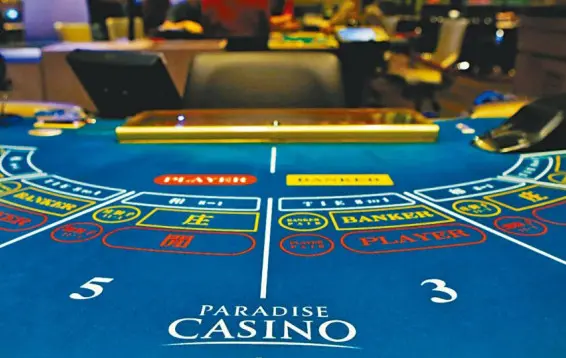
Not all Dragon Bonus configurations are built the same. The standard pay table returns 1-to-1 on a natural win, 1-to-1 on a margin of 1, 2-to-1 on a margin of 2, 4-to-1 on margin 3, 6-to-1 on margin 4, 10-to-1 on margin 5, 15-to-1 on margin 6, 30-to-1 on margin 7, and 40-to-1 on margin 8, with a 30-to-1 payout on a non-natural tie. Notice what's missing? A line item for the push. That's because the push is a return of the wager, not a payout. It's the null state. The settlement engine returns the stake and zero profit.
But the VIP variants — and this is where the real money hides — sometimes adjust the push handling on natural ties to a 10-to-1 partial payout instead of a flat return. These tables are rare and usually only found in high-limit rooms in Macau and Singapore. The Dragon Bonus push rule in these configurations is modified through a separate firmware flag that the pit boss controls via the terminal's back-end menu. If you don't ask, you'll never know which version you're playing against.
The algorithmic takeaway is brutal and simple: the push fires on congruent totals post-draw, returns your stake, and zeroes out profit. Anything else — naturals, margins, tie payouts — follows a different branch. The house edge absorbs the push frequency, which historically lands around 9.5 percent of all resolved Dragon Bonus hands. That frequency is your baseline. If a terminal is pushing significantly more or less than that, the firmware is either misconfigured or running a non-standard comparator.
Terminal Diagnostics and Live Auditing
Serious players track push frequency over a minimum of 500 resolved hands. Log every Dragon Bonus outcome. If the push rate deviates more than two standard deviations from the 9.5 percent baseline, flag that terminal. The math doesn't lie, but the firmware sometimes does. I've seen units where a dirty card sensor caused phantom third-card triggers, inflating the push rate to 14 percent and completely distorting the side bet's expected value. That's not variance. That's a hardware fault you can exploit — or get destroyed by, depending on which side of the wager you're on.
The push condition is the cleanest signal in the entire Dragon Bonus architecture. When banker mod 10 equals player mod 10 after all cards are dealt, the settlement branch terminates the hand with a return. No payout. No loss. Just the cold, mechanical logic of a comparator circuit doing exactly what it was burned to do — and nothing more.